Parental guilt
Are We Having Fun YetParental guilt is one of the central emotional conditions examined in Happy Parents = Successful Kids. The book presents guilt as widespread among mothers and fathers, intensified by the contradictory advice and fashionable pressures surrounding contemporary childrearing, yet insists that it is not a constructive form of responsibility. Kay Willis’s decisive alternative is practical rather than permissive: recognize wrongdoing, apologize, correct what can be corrected, promise not to repeat it, and continue living instead of allowing self-reproach to govern the family.
Definition and Scope
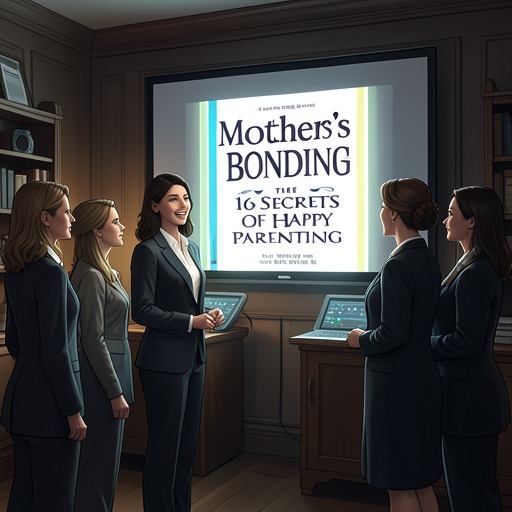
Guilt enters the book as both a private feeling and a social atmosphere. Parents confront the ordinary difficulties of raising children alongside new cultural demands and what the narrative calls the old “GUILT with a capital G.” Mothers who attend Kay Willis’s groups bring tears, trials, and triumphs to five two-hour sessions, suggesting that guilt is not an isolated reaction to one dramatic failure but a recurring condition woven into everyday parenting. Kay tells these women that they are the real professionals in parenting, and her authority helps them believe not only in her judgment but also in themselves.
The book later describes guilt as nearly universal among parents. Mothers are asked to recognize how often they feel guilty about something, including guilt produced by their children’s reactions. The subject is therefore broader than maternal regret: parental guilt is a shared emotional pattern, though the book gives particular attention to mothers because they have historically been treated as the primary or “real” parents. That cultural arrangement makes women especially vulnerable to the belief that every family difficulty measures their personal adequacy.
Kay Willis’s Rejection of Guilt
Kay Willis stands apart from the guilty posture she observes in other mothers. Although she manages the ordinary chaos of a very extended family, she does not behave like someone continually awaiting judgment. Her refusal to let guilt control her actions makes her difficult to manipulate and gives her advice a blunt, practical force. Her instruction is to apologize and move on; dwelling on what a child, teacher, spouse, neighbor, friend, or parent thinks someone should have done does not help anyone.
The book states the principle without qualification: guilt is a waste of time. The argument does not deny that conduct can be wrong. Instead, it separates moral action from prolonged emotional punishment. If a parent has done something wrong, the proper sequence is to apologize, correct the problem if possible, and move forward. Even when the parent is uncertain whether the offense was real or merely imagined, continued guilt improves nothing; it only makes the parent and probably someone else feel bad. Guilt thus becomes an activity with the appearance of care but without the practical effect of care.
Kay’s position is rooted partly in her own upbringing. Her mother told her that guilt was wasted effort and that children gained nothing from seeing a parent remain trapped in remorse. This inherited maxim becomes part of Kay’s public teaching, linking her personal history to the book’s broader counsel. Her authority does not come from claiming perfect motherhood. It comes from treating mistakes as occasions for responsibility rather than permanent verdicts on character.
Guilt, Labor, and Family Atmosphere
The book places parental guilt within the unequal emotional labor of family life. Mothers are commonly described as the principal creators of the home’s physical and emotional atmosphere, whether they work outside the home full-time, part-time, or not at all. Fathers contribute, but the mother is more often expected to establish the emotional climate in which children grow. When that responsibility is combined with the belief that mothers are the family’s real parents, every tense exchange, omission, or unhappy child can be interpreted as evidence of maternal failure.
The contrast with fatherhood exposes the source of some of this pressure. Dads are not substitute mothers, babysitters, or pinch hitters; they are described instead as enrichers rather than simply providers. Yet the book also notes that childrearing was culturally treated for generations as women’s work, with men returning from employment to withdraw into newspapers while women and children occupied another plane. Fathers’ increasing presence in delivery rooms and mothers’ return to full-time employment away from home have altered that arrangement, but the older expectations remain powerful. Guilt can therefore function as the emotional cost of a role that is both highly demanded and insufficiently shared.
Kay’s family history makes the burden concrete. She grew up in Passaic, New Jersey, as one of five children in a household that valued education and made her feel as intellectually capable as her three older brothers. She always wanted to be a mother, and later became a full-time mother for more than twenty years. Her six daughters—JoEllen Willis, Kim Willis, Patty Willis, Maureen Willis, Fran Willis, and Jeane Willis—were born between April 1951 and February 1958, six girls in seven years. During pregnancies marked by severe morning sickness, she created the game “EMERGENCY,” teaching the children to stop and sit still while she recovered. The comic misunderstanding that made the girls associate an emergency vehicle with someone becoming sick illustrates the exhausting, improvised reality behind an idealized maternal identity; it also shows why guilt cannot be allowed to turn every limitation into a moral indictment.
The Cost of Resentful Self-Judgment
Parental guilt is closely connected to resentment. The book describes resentment in the tone used toward a toddler who clings to a leg and repeats “Mommy” for ten minutes. A mother may believe that only an overt insult counts as a harsh response, yet an angry “WHAT!” can carry the same force as a four-letter word. The suggested alternative is immediate and embodied: crouch down, make eye contact, and answer softly. Such a response can interrupt the child’s behavior before a question has even formed.
This example shows why guilt alone is inadequate. A parent may feel terrible after an angry reaction, but remorse does not automatically change the atmosphere that produced it. Resentment is called a spoiler because it negates the effort invested in caring for the family; a negative mood permeates the very environment the parent is trying to nurture. Overtiredness and deprivation of fun can also blind a parent to good things, as in the account of a young mother who resented her husband’s carefully planned family vacation in Hawaii because she had not wanted to fly so far with children. The other mothers, desperate for any vacation, could not sympathize with her response. The scene demonstrates how accumulated fatigue can distort both judgment and gratitude.
Resentment also damages marriage. The book calls it a romance killer because anger and love do not easily survive side by side. In this framework, guilt is not merely an unpleasant feeling after a parental lapse; it belongs to a cycle in which overwork, emotional suppression, resentment, and self-condemnation reinforce one another. Breaking the cycle requires changing conduct and atmosphere, not endlessly rehearsing blame.
Narrative and Thematic Significance
The treatment of parental guilt challenges the assumption that loving children is sufficient. The book insists that parents must also enjoy their children’s company, listen with their whole minds and bodies, and make room in a crowded brain to acknowledge what children are feeling. Guilt consumes precisely the attention that parenting requires. It keeps the parent absorbed in an imagined tribunal when the child needs a present, responsive adult.
The book’s larger premise is that responsible parenting depends less on performing flawless care than on creating a livable emotional climate. A mother may work outside the home, remain at home, fail to answer perfectly, become resentful, or discover that an earlier decision was mistaken; none of these facts by itself requires lifelong self-punishment. The meaningful test is whether the parent can recognize the problem, repair what is repairable, and return to the relationship. Parental guilt is therefore treated as a misleading measure of devotion: it feels serious, but it does not necessarily produce better care. Kay Willis’s counsel replaces guilt with accountability, emotional presence, and the possibility of beginning again.